| HOME | ABOUT US | BOOK COLLECTIONS | S GAUGE MAGAZINES | EVENTS | OUR OTHER WEB SITES | CONTACT US |
Intermodal Railroading |
||
| By Brian Solomon |
|
|
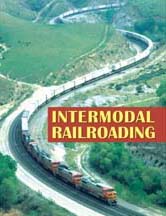
For the first time ever, intermodal railroading—perhaps the most revolutionary development in freight railroading, if not the freight industry—is examined in a concisely written and completely illustrated history showcasing 200 vintage and modern photographs.
The advantages of intermodal railroading—the use of trailers and containers on flatcars to transload cargo to and from highway trucks and oceangoing vessels—are obvious: less cargo-handling and better security translate to reduced transit times, costs, and cargo damage. Author Brian Solomon shows how the North American rail industry moved to exploit these advantages—beginning with formative attempts at “piggybacking” in the 1930s—and how prevailing global economic conditions and federal deregulation spurred intermodal growth. Special emphases on the formation of pioneering equipment manufacturer and provider Trailer Train (renamed TTX), container-shipping pioneer Sea-Land, and the intermodal-friendly Los Angeles Corridor, provide context for a complete history of postwar intermodal, including North America’s “land-bridge” role and modern innovations like articulated spine cars and double-stack well cars.
While bringing readers to intermodal hubs such as Los Angeles–Long Beach, Oakland, Seattle-Tacoma, Houston, and South Kearny, New Jersey, among others, Solomon also examines motive power, the effects of railroad mergers, and the roles played by trucking and shipping firms such as Maersk, J. B. Hunt, UPS, NOL, Hanjin, and K-Line, to name a few. Rounded out by a glossary of terms, this wonderfully illustrated layman’s guide to the world of intermodal will prove indispensable to anyone interested in modern railroad operations.Hardcover, 8 1/2 x 11", 192 pages, 169 color photos. ISBN: 978-0-253-34692-6 Price: $36.95
|
||